Primary Prevention aims to prevent unwanted incidents before they ever occur. A classic example of primary prevention is vaccination. The huge advantage of this approach is that by preventing the incident in the first place, after-effects of the incident are prevented as well.
Primary prevention will be especially beneficial in the field of sexual violence since such experiences can lead to many short term and long term consequences. These consequences include but are not limited to physiological impact, psychological issues, psychosomatic disorders, relationship and attachment difficulties, and according to latest studies in the case of child sexual abuse even irreversible physical brain damages.
One example for a successful implementation of a primary preventive approach in the field of sexual violence is the Dunkelfeld Project, which was started by our collaboration partner the Charité Berlin.
Program for Primary Prevention of Sexual Violence
PPPSV
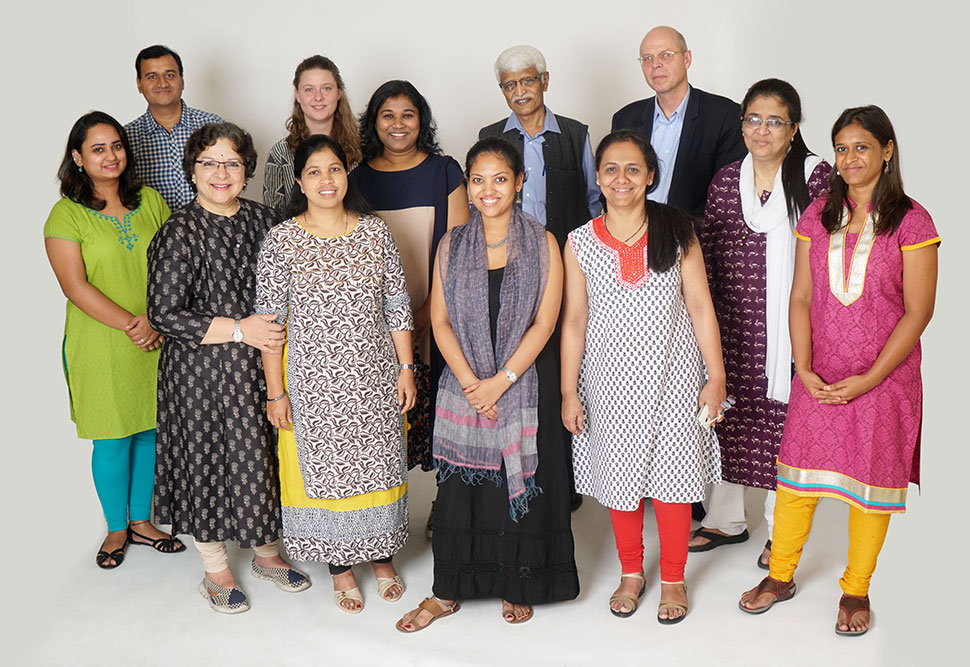
The Program for Primary Prevention of Sexual Violence (PPPSV) is a collaborative initiative of various institutions and professionals that aims to prevent sexual violence against women and children in India.
Using evidence-based treatment strategies, years of clinical experience and a strong understanding of varying cultural contexts, Indian and German experts have started a dialogue and combining efforts, to protect women and children from experiencing sexual violence and its aftereffects.
The unique goal of the PPPSV is to develop and implement strategies for primary prevention of sexual violence in India by shifting the lens to focus on people at risk to sexually offend against children instead of potential victims.
Taking on these development opportunities and looking at the unique requirements of our country in the space of preventing sexual violence towards both women and children, our team developed three programs that focus on:
1. Research on child sexual abuse in India
2. Primary prevention of child sexual abuse through treatment
3. Primary prevention of sexual violence against women through deterrence
Our Story
Sexual violence is a gross violation of human rights and occurs in the form of abuse, maltreatment, human trafficking, harassment, rape or sexual exploitation, irrespective of the place and gender and age of the person. Evidences show that sexual violence can have serious short and long-term physical, psychological, social and economic consequences for the survivors, their families, and communities.
In India, sexual violence is a grim reality for adults and children alike. According to a Ministry of Women and Child Development study report in 2007, 53.22% children have faced one or more forms of sexual abuse. Similarly, the National Family Health Survey in 2014 reported a prevalence rate of 8.5% for sexual violence against adult women.
A team of Indian and German experts, have started a collaborative initiative to prevent sexual abuse against women and children. We focus on using innovative strategies from the field of medical science to implement measures to prevent sexual violence and thereby contribute to social and public health.